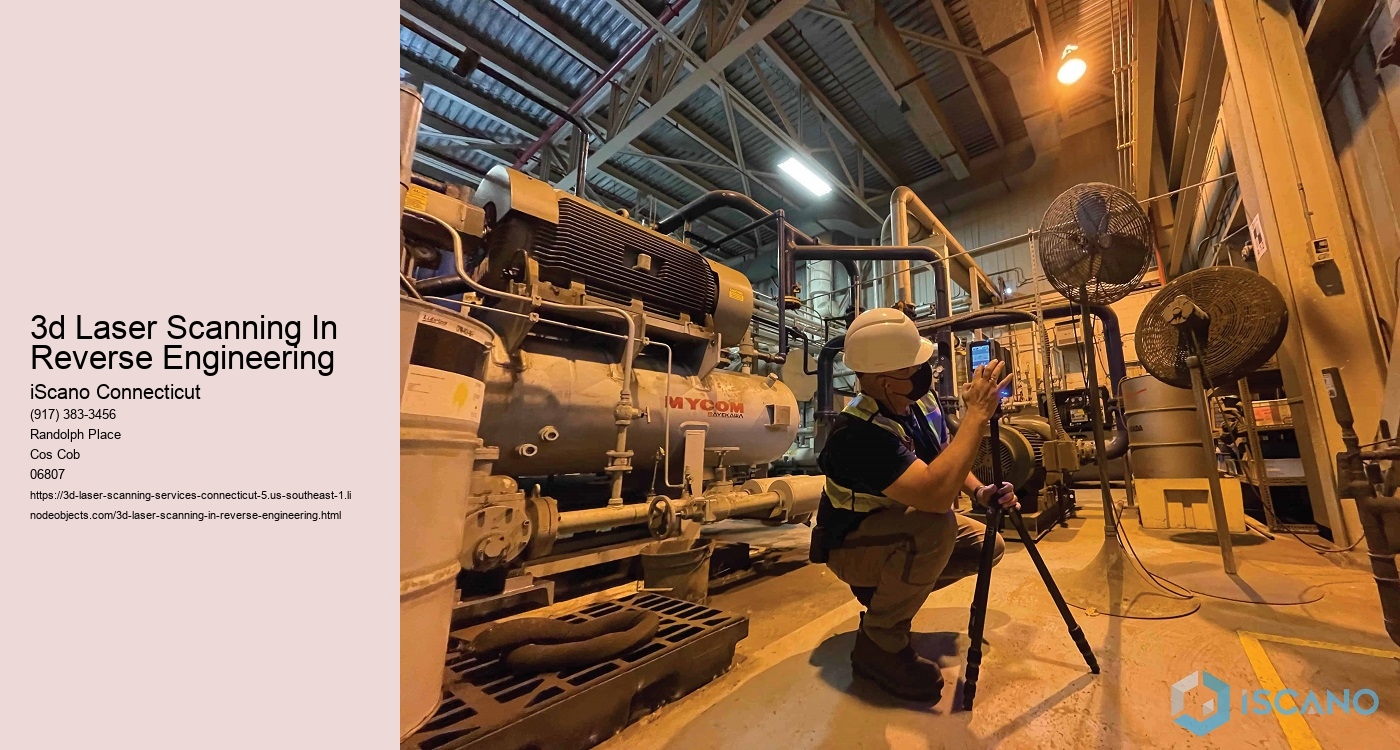
Introduction to 3D Laser Scanning: What It Is and Why It Issues
3d Laser Scanning In Archaeology .3D laser scanning is a transformative modern technology that has actually reinvented the method we catch and analyse the physical world. From industrial style to heritage conservation, this innovation offers a specific and efficient way to produce comprehensive digital models of things, structures, and landscapes. In a progressively electronic age, understanding the principles of 3D laser scanning is critical for sectors and professionals looking for to remain in advance of the curve. This post supplies a thorough intro to 3D laser scanning, exploring what it is, why it matters, and the various means it is being made use of throughout different industries.
What Is 3D Laser Scanning?
At its core, 3D laser scanning is an innovation that catches the form of physical objects utilizing laser light. It works by sending out laser light beams that jump off surface areas and return to the scanner, which then determines the range based upon the moment it takes for the light to return. This process, known as time-of-flight dimension, enables the scanner to generate exact three-dimensional representations of the checked object or setting.
These representations are usually referred to as factor clouds, which are thick collections of information factors in a three-dimensional coordinate system. Each point in the cloud stands for an exact area externally of the scanned item, catching not just its form yet likewise its appearance and colour (depending on the kind of scanner made use of). When caught, these factor clouds can be processed and converted into 3D designs making use of specialist software program.
The Parts of a 3D Laser Scanner
A regular 3D laser scanner contains several key elements:
-
Laser Emitter: This part produces the laser beam that is projected onto the object or surface area being scanned.
-
Receiver/Detector: The receiver discovers the laser light as it reflects back from the things. It measures the moment taken for the light to return, which is then utilized to calculate the range between the scanner and the things.
-
Rotating Mirror: In many scanners, a turning mirror is utilized to direct the laser beam throughout the things. This permits the scanner to record data from various angles, ensuring that the whole surface of the item is covered.
-
Control System: The control system handles the procedure of the scanner, including the timing of the laser pulses and the activity of the rotating mirror.
-
Data Processing Software Application: Once the raw data is accumulated, it requires to be refined right into a functional style. Specialised software application is used to convert the point cloud data right into a 3D design, which can then be evaluated, customized, or incorporated into various other digital systems.
Kinds Of 3D Laser Scanners
There are several sorts of 3D laser scanners, each matched to various applications:
-
Terrestrial Laser Scanners (TLS): These scanners are generally used for massive projects such as surveying buildings, bridges, or landscapes. They are installed on a tripod and can capture information from long distances, making them ideal for outdoor use.
-
Handheld Laser Scanners: As the name recommends, these scanners are portable and can be used to catch smaller sized objects or areas that are challenging to get to with a larger scanner. They are generally utilized in markets such as auto, aerospace, and production.
-
Aerial Laser Scanners (LiDAR): LiDAR (Light Detection and Ranging) is a type of laser scanning that is generally mounted on aircraft or drones. It is used to catch large topographical information, such as forests, mountains, or city locations.
-
Structured Light Scanners: Unlike standard laser scanners that use a solitary laser beam, structured light scanners project a pattern of light onto the item. By analysing the contortion of the pattern, the scanner can generate a 3D design. These scanners are usually made use of for in-depth inspections in production and quality control.
Why 3D Laser Scanning Issues
The significance of 3D laser scanning depends on its capability to give highly precise and thorough depictions of the physical world. This capability has significant implications across numerous industries and applications:
-
Accuracy and Precision: 3D laser scanning can capture numerous data factors per 2nd, causing extremely detailed and exact models. This degree of precision is necessary in sectors such as engineering, architecture, and building, where even small errors can have substantial effects.
-
Effectiveness: Conventional methods of measurement and documentation can be lengthy and labour-intensive. 3D laser scanning enhances the process by capturing thorough information in a portion of the moment. This performance is particularly beneficial in massive tasks, such as checking a building and construction website or recording a historic landmark.
-
Non-Invasive Data Collection: 3D laser scanning is a non-contact method, meaning that it does not call for physical communication with the item being scanned. This is especially vital when handling delicate or unattainable items, such as social heritage websites, archaeological artefacts, or unsafe settings.
-
Convenience: 3D laser scanning is a functional innovation that can be used in a large range of industries, from manufacturing and building and construction to healthcare and home entertainment. Its capability to capture intricate geometries makes it indispensable in any field that needs detailed spatial evaluation.
-
Boosted Visualisation and Analysis: The 3D versions created by laser scanning can be utilized for visualisation, simulation, and evaluation. For example, designers can utilize these versions to develop digital walkthroughs of buildings, while designers can imitate how a structure will act under various conditions.
Summary of 3D Laser Scanning Technology
To comprehend the complete effect of 3D laser scanning, it's essential to discover the technology behind it and exactly how it has evolved for many years.
The Advancement of 3D Laser Scanning
3D laser scanning has its origins in the early 1960s, when the very first laser was established. At first, lasers were utilized largely for scientific study and armed forces applications. Nonetheless, as technology advanced, the potential for using lasers to gauge ranges and capture detailed spatial data emerged.
In the 1980s, the initial commercial laser scanners were presented, marking a considerable turning point in the growth of 3D scanning technology. These early scanners were huge, pricey, and restricted in their abilities, but they laid the groundwork for future improvements.
The 1990s saw substantial renovations in laser scanning technology, with the introduction of even more small and economical scanners. This duration likewise saw the growth of software that might refine point cloud information into 3D designs, making the innovation a lot more obtainable to a broader variety of sectors.
Today, 3D laser scanning is a mature innovation that remains to progress. Advancements in computing power, information storage, and software program algorithms have made it feasible to record and refine bigger and more complicated datasets. At the very same time, the growth of new scanning technologies, such as handheld and drone-mounted scanners, has actually broadened the series of applications for 3D laser scanning.
Key Technologies in 3D Laser Scanning
Several essential technologies are indispensable to the operation of 3D laser scanners:
-
Time-of-Flight (ToF) Measurement: This is the most typical method used in 3D laser scanning. It involves determining the moment it considers a laser light beam to travel to an object and back to the scanner. By computing the time-of-flight, the scanner can establish the range to the object and produce a 3D factor.
-
Phase Change Measurement: In phase shift measurement, the scanner sends out a continual laser light beam that is modulated in amplitude. The stage distinction in between the given off and gotten light is utilized to determine the distance. This approach is usually used in high-precision scanners and can accomplish better accuracy than time-of-flight dimension.
-
Triangulation: Triangulation-based scanners utilize a laser beam of light and a cam to catch data. The laser predicts a point or line onto the item, and the video camera catches the reflected light. By evaluating the angle between the laser, the things, and the electronic camera, the scanner can figure out the distance and generate a 3D factor.
-
Structured Light: Organized light scanners forecast a pattern of light (such as stripes or dots) onto the object. The deformation of the pattern is recorded by a video camera, and the data is made use of to compute the 3D form of the item. Structured light scanners are understood for their high accuracy and are often utilized in applications requiring detailed surface area measurements.
-
Multi-Sensor Integration: Some advanced 3D laser scanners incorporate numerous sensing units, such as cams, GPS, and inertial dimension units (IMUs), to improve the precision and convenience of the data. For instance, LiDAR systems used in autonomous vehicles frequently integrate laser scanning with various other sensing units to produce a thorough map of the atmosphere.
Applications of 3D Laser Scanning
The applications of 3D laser scanning are large and differed, with the innovation being made use of in numerous industries:
-
Design and Building And Construction: 3D laser scanning is widely made use of in the design and building and construction industries to produce accurate as-built models of buildings and facilities. These models can be used for style, renovation, and upkeep functions, in addition to for clash discovery in intricate jobs.
-
Production: In production, 3D laser scanning is used for quality control, reverse engineering, and prototyping. The ability to record precise dimensions of components and settings up ensures that products fulfill style requirements and function as planned.
-
Social Heritage and Archaeology: 3D laser scanning plays an essential duty in maintaining cultural heritage websites and artefacts. By developing thorough digital documents, scientists can research and analyse these treasures without running the risk of damages. Furthermore, 3D models can be used for digital restoration and visualisation, allowing the public to experience historical sites in brand-new methods.
-
Healthcare: In medical care, 3D laser scanning is used for a range of applications, consisting of developing customized prosthetics, orthotics, and dental home appliances. The technology is likewise utilized in medical imaging and surgical procedure planning, where accurate 3D models of patients' ' anatomy are crucial for successful outcomes.
-
Enjoyment and Media: The entertainment industry has actually embraced 3D laser scanning for developing reasonable visual effects, animations, and virtual reality experiences. The modern technology permits filmmakers and video game developers to catch real-world atmospheres and characters, bringing a new degree of realistic look to their work.
-
Transportation and Framework: 3D laser scanning is utilized in transportation and framework tasks to check roads, bridges, passages, and trains. The data gathered can be made use of for planning, style, and maintenance, making certain that these critical frameworks continue to be risk-free and practical.
-
Environmental Monitoring: LiDAR, a kind of 3D laser scanning, is extensively used in environmental monitoring and natural deposit administration. It is utilized to map woodlands, measure plant life development, monitor seaside disintegration, and evaluate the effect of natural disasters.
The Future of 3D Laser Scanning
As modern technology continues to advancement, the future of 3D laser scanning looks promising. Some of the essential fads and developments that are most likely to shape the future of this modern technology consist of:
-
Boosted Automation: The assimilation of artificial intelligence (AI) and machine learning right into 3D laser scanning systems will certainly make it possible for greater automation in data collection and handling. This will decrease the need for hands-on treatment and increase the rate and efficiency of scanning procedures.
-
Miniaturisation and Portability: As scanners lessen and a lot more portable, they will certainly be easier to deploy in a wider variety of atmospheres. This will open up brand-new possibilities for applications in areas such as space exploration, catastrophe action, and wearable innovation.
-
Real-Time Processing: Breakthroughs in calculating power and information storage will certainly allow real-time processing of point cloud information, enabling customers to watch and analyse 3D designs on the place. This will be particularly important in sectors such as building and construction and surveying, where immediate responses is necessary.
-
Integration with Various Other Technologies: The future of 3D laser scanning will likely involve greater combination with other technologies, such as drones, robotics, and the Internet of Things (IoT). This will enable much more extensive information collection and evaluation, resulting in new insights and applications.
-
Democratisation of 3D Scanning: As 3D laser scanning technology ends up being extra economical and obtainable, it will certainly be embraced by a broader range of industries and specialists. This democratisation will certainly drive technology and broaden the use instances for 3D scanning, making it an important device in the electronic age.
Conclusion
3D laser scanning is an effective and versatile technology that has actually changed the means we record and analyse the physical world. Its capability to offer exact, detailed, and efficient measurements has made it an indispensable tool across a variety of sectors, from building and making to medical care and social heritage. As the innovation continues to progress, we can anticipate to see also better innovations in automation, transportability, and integration, paving the way for new applications and possibilities. Whether you're a designer, designer, archaeologist, or filmmaker, comprehending 3D laser scanning is important for staying in advance in a progressively digital world.
![[icon]](https://lh7-us.googleusercontent.com/BbJnF3zBFHNKGJJMgmMtpns4P7fS_JL2JfUNwPBa0xfxRy5lMIMKXTL003GoTOpeHs67le8OSje5JR87Oy97hFMS0v9o8drupSXn7KJIWaRyuQsDdNCZmUy2i2-XMjrfryIFSNCq9a5wd2IiA-Mlk3A)